BOV bill hits wall
After a year of political turmoil at UVA, Gov. Abigail Spanberger vetoes legislation that would have reshaped board terms—leaving higher education governance unchanged for now.
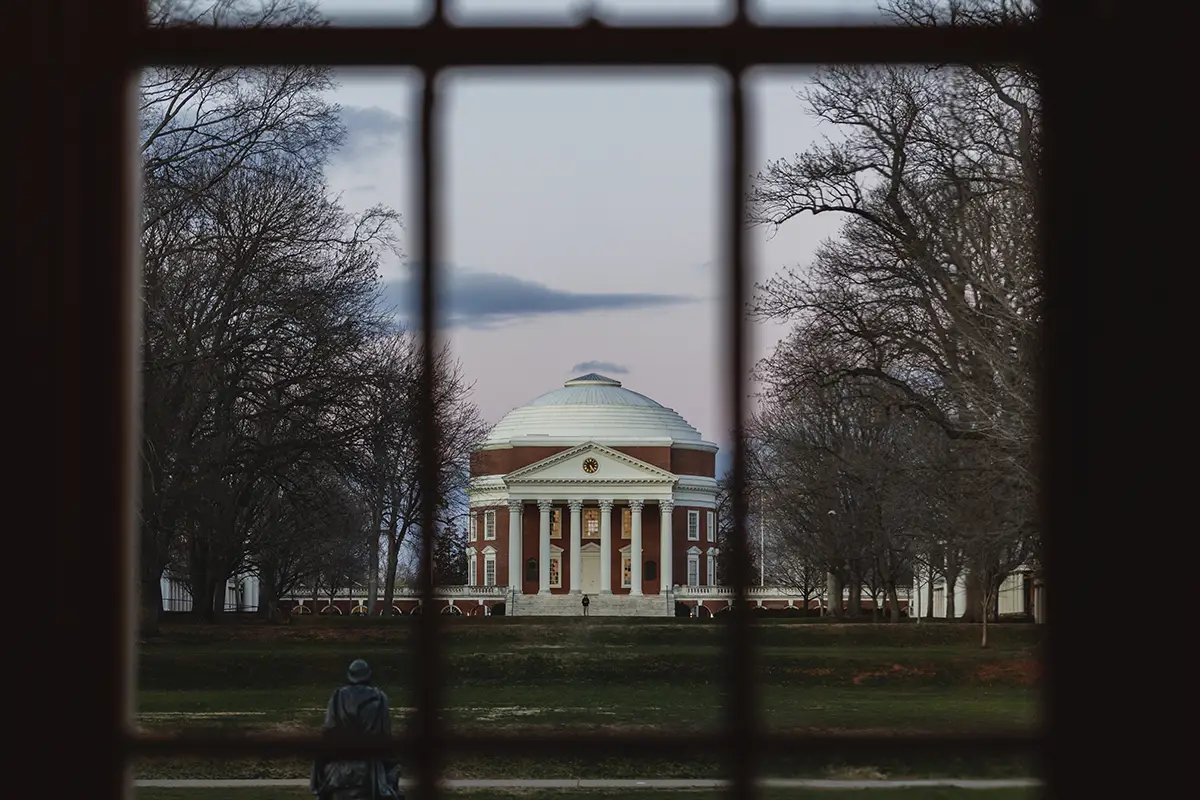
The political upheaval that engulfed the University of Virginia during the past year will not—at least for now—lead to changes in how Virginia’s public universities are governed. Democratic Gov. Abigail Spanberger (Col class of ’01), breaking with lawmakers in her own party, vetoed legislation in May that would have restructured board terms and strengthened protections for academic freedom.
State Sen. R. Creigh Deeds, D-Charlottesville, a chief author of the legislation, said he was “very disappointed” with the governor’s decision.
“Many people worked on the bill, or a version of the bill, for months,” he said in a May email. “The whole purpose of the bill was to provide the system with insulation from partisan politics.”
In April, Spanberger offered amendments to identical bills passed by the House and Senate. The General Assembly rejected those and sent the bills back without changes.
The legislation would have shifted board appointments from a maximum of two consecutive four-year terms to a single six-year term with a required two-year gap before reappointment, aiming to limit the ability of any governor to appoint all members of a board within a single term. The bills also would have created a nonvoting staff seat and prohibited members from adopting policies that limit expression based on political viewpoint or partisan objectives, among other changes.
According to Democratic lawmakers, the bills were an attempt to respond to a fractious period at UVA and some other state universities, which included President Jim Ryan (Law class of ’92) stepping down in June 2025 under intense pressure from the Trump administration. Ryan later suggested that he was pushed out by some board members appointed by Republican Gov. Glenn Youngkin under threat that the university would lose millions in federal research funding.
After taking office in January, Spanberger quickly reshaped UVA’s Board of Visitors by appointing five new members and filling five other vacancies. She also pledged to work with state legislators to prevent future governors from imposing an “ideological agenda” on Virginia’s public universities.
But in the end, she rejected lawmakers’ first attempt.
In an interview with Virginia Magazine in April, the governor said she wasn’t convinced that an overhaul of board terms was the appropriate response. But in a statement after the veto, she said she remained committed to “enacting reforms that will strengthen higher education governance.”
“There’s not necessarily a reason to believe that four-year terms themselves are the problem,” she said. “Spacing out the cadence of board service doesn’t automatically provide greater stability—it just shifts the years. If you have a cohort of people, by virtue of who appointed them and when, that intends to be disruptive, it will happen regardless of where you place the terms.”
Spanberger has since reappointed three of her own board picks to full 4-year terms that start in July: Mohsin Syed (Col class of ’02, Law class of ’08), Elizabeth Hayes (Law class of ’78) and Owen Griffin Jr. (Com class of ’93, Grad class of ’94, Darden class of ’99). She also opted to retain Amanda Pillion (Educ class of ’97, class of ’99), originally appointed by Republican Gov. Glenn Youngkin, for a second term, according to a university spokesperson.