Amid dizzying changes to college sports, Tony Bennett bows out
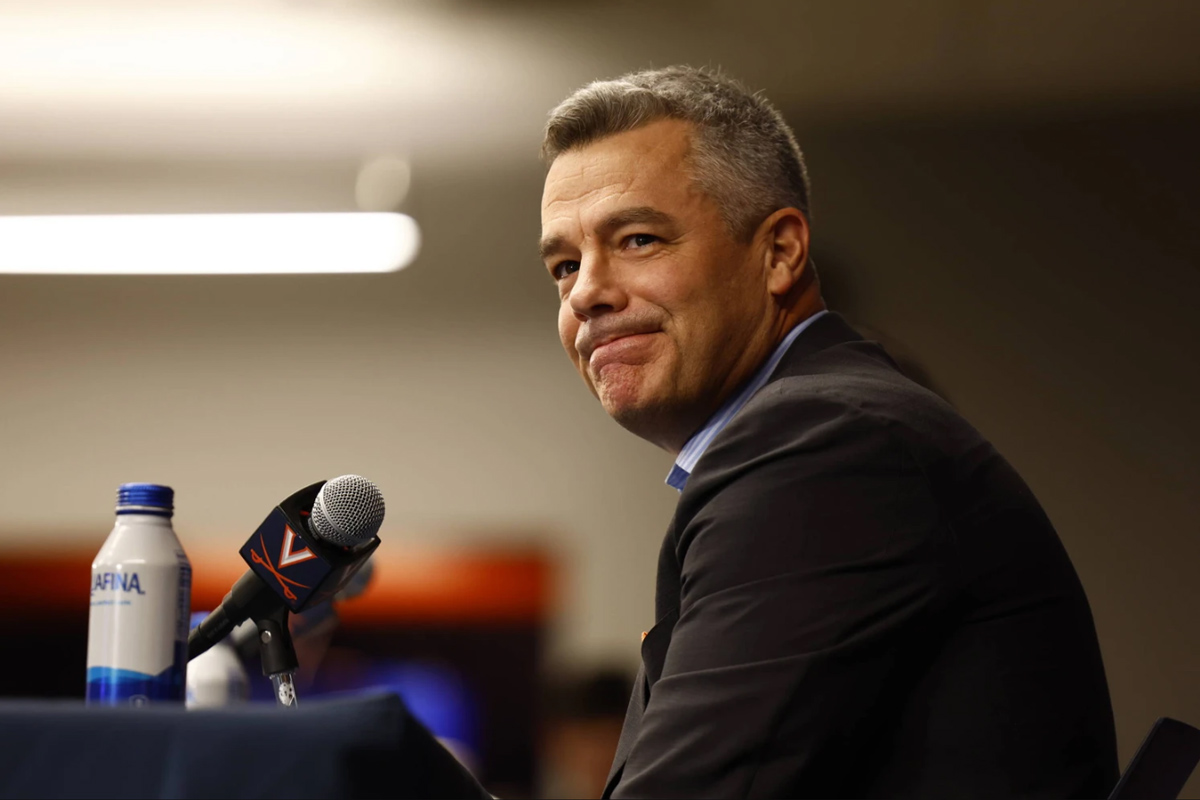
In the same room where he was introduced as Virginia’s men’s basketball coach in 2009, Tony Bennett sat uneasily behind a microphone, facing a hastily gathered crowd of current and former UVA administrators, coaches and players, supporters and media members.
Bennett’s voice caught and he visibly fought back tears as he explained his decision to retire abruptly, just three weeks before the start of his 16th season.
“Probably the thing that’s choked me up the most and the hardest to say is when I looked at myself and realized I’m no longer the …” he said, gathering himself before continuing, “no longer the best coach to lead this program in this current environment. And if you’re going to do it, you’ve got to be all in.”
The environment Bennett referred to is the rapid, dizzying transformation of major college sports toward a professional model, with loosely regulated payments to players, the lifting of restrictions on player transfers and the increasing influence of agents, among other changes.
“The game and college athletics is not in a healthy spot,” Bennett said.
UVA Director of Athletics Carla Williams went further, calling the current state of college athletics “chaos.”
“When people like Tony Bennett exit men’s basketball, exit our industry, for something that has nothing to do with coaching or teaching or being a role model, then shame on all of us,” Williams said.
The disruption began in 2021, when the U.S. Supreme Court found that the NCAA was subject to antitrust laws. The decision opened the way for “name, image and likeness” payments to players, ostensibly for things such as brand endorsements, appearances, charity work and social media posts.
“I am at peace. When you know in your heart it’s time, it’s time.”
Payment for performance was prohibited. But booster-led NIL collectives have paid de facto salaries and signing bonuses to star players and recruits, creating bidding wars for top talent at some schools.
The lifting of restrictions on player transfers in response to another antitrust suit has resulted in virtual free agency. Transferring players were formerly required to sit out a season, which limited their numbers. Last season, a record 1,089 Division I men’s basketball players entered the NCAA transfer portal, according to the website On3.com. Virginia added five transfers for this season, a time-intensive process that often involves negotiations with player agents, Bennett said.
“For two straight months we’re in the transfer portal. … You’re involved in situations and conversations and things that I’m not great at.”
In May, the NCAA and its major conferences reached a settlement that will allow schools to share revenue directly with players. The deal, which has received preliminary approval from a judge, also seeks to rein in the influence of boosters by subjecting third-party NIL deals to NCAA approval.
Even if approved, however, the settlement is not expected to be the final word on the new model of college athletics, whatever it turns out to be.
In his announcement, Bennett stressed that he is not against payments to athletes, and he said collective bargaining with players is the only way to impose salary and transfer restrictions and limit the influence of agents.
But the NCAA has argued in court against granting athletes employee status—key to collective bargaining. Bennett called himself a “square peg in a round hole” in this new world. He said he was not willing to wait for the courts, the NCAA, or possibly the U.S. Congress to sort things out.
“My staff has buoyed me along to get to this point, but there needs to be change,” he said.
The timing of his decision was unusual, coming with the season just around the corner. Bennett said it came after long deliberation. He considered stepping down after last season but got caught up in recruiting players in the transfer portal—an unavoidable reality for coaches these days. He signed a contract extension in June, and although he wasn’t sure he’d complete the full six years on his deal, he said, he expected to be around at least a bit longer and went about preparing for the upcoming season.
During a fall break trip with his wife, Laurel, he said, he got a chance to reflect—and decided it would be unfair to the players for him to continue to coach if his heart was not in it.
“I am at peace,” he said. “When you know in your heart it’s time, it’s time.”
Bennett walks away at the relatively young age of 55 as Virginia basketball’s winningest coach, with a career record of 364-136. He guided the Cavaliers to the 2019 NCAA Championship, two ACC Tournament titles, six ACC regular-season championships and 10 NCAA tournament appearances. He was named ACC Coach of the Year four times.
With Bennett’s sudden departure just a few weeks before the start of the season, Williams promoted associate head coach Ron Sanchez to interim head coach for the 2024-25 season. Virginia will conduct a national search for a new coach after the season, she said.
“The college game has lost a giant,” said Indiana Pacers coach Rick Carlisle (Col class of ’84), who was among the many who came to the press conference to salute Bennett. “In the way he has done it and what he stands for and the integrity he has personally and as a coach.”