Queer History
A quick look at LGBTQ+ history at UVA
Editor’s note: This is a condensed version of a story that ran in Virginia Magazine’s Fall 2024 edition. Click here for the full version.
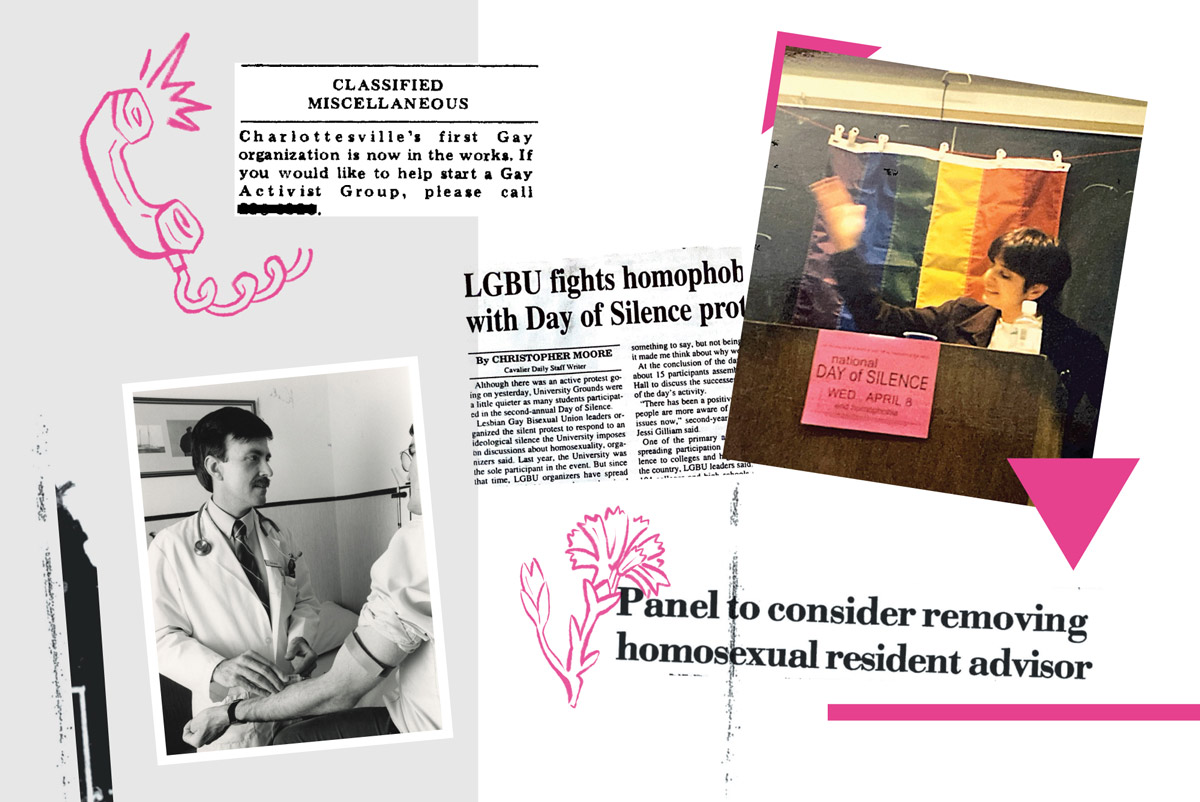
Just five or six people showed up to start “Charlottesville’s first Gay organization” in 1972. At that time, the group’s “great achievement of that truncated first year … was simply existing.”
Over the decades, members of UVA’s queer community have navigated their own coming-out process and families and communities that haven’t always embraced them. They have faced pranks, threats and violence, but they have also found community and joy. Today, across Grounds, affinity groups provide a home base for LGBTQ+ students.
But in the 1970s it was a different story. The launch of the Gay Student Union gave the LGBTQ+ community more visibility but it faced an uphill battle. In 1973, the Board of Visitors denied the GSU $45 in funding from the Student Activity Fee. The group ultimately won funding in 1975.
In 1976, UVA made news across the country when President Frank L. Hereford Jr. (Col class of ’43, Grad class of ’47) assembled a committee to determine whether resident adviser Bob Elkins (Col class of ’79), who had been open about being gay and served as president of the Gay Student Union, could remain in his role.
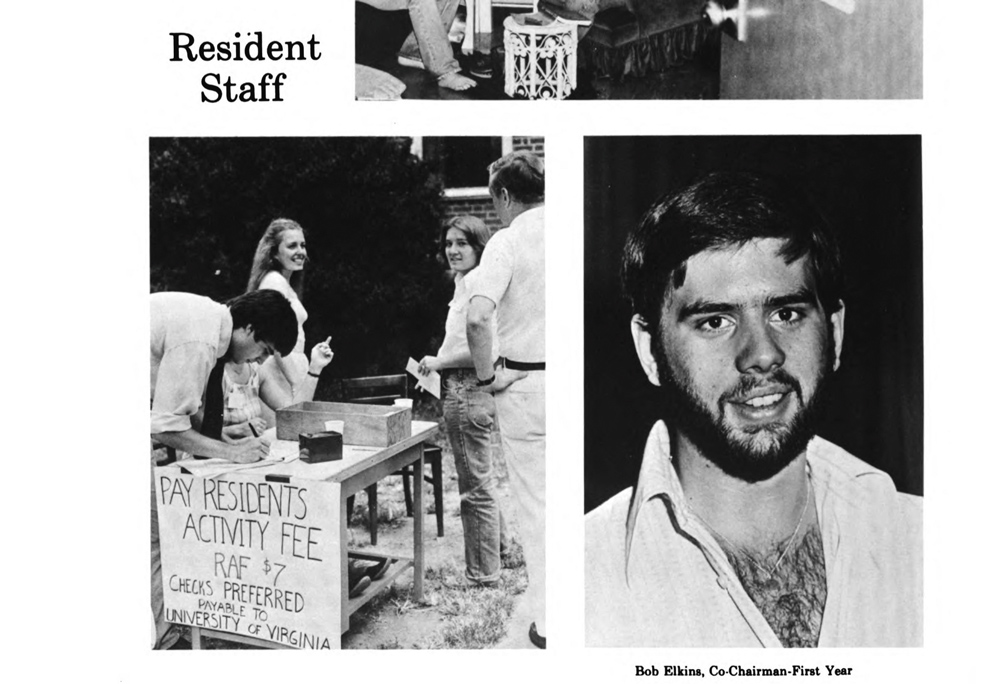
By all accounts, Elkins was excelling as an RA. The panel ultimately recommended that Elkins remain on the job, and Hereford agreed. “There was a lot of support there, and I never thought I did anything wrong,” Elkins says. “I was just being a student and being an RA, and I wasn’t going to back down.”
As the AIDS epidemic emerged in the ’80s, animosity toward the LGBTQ+ community remained high. At UVA, Dr. Richard Keeling (Col class of ’69), UVA’s director of student health service and associate professor of medicine, launched an AIDS education program—one of the first on a college campus. “We started AIDS education before it became a problem,” Keeling later told Alumni News.
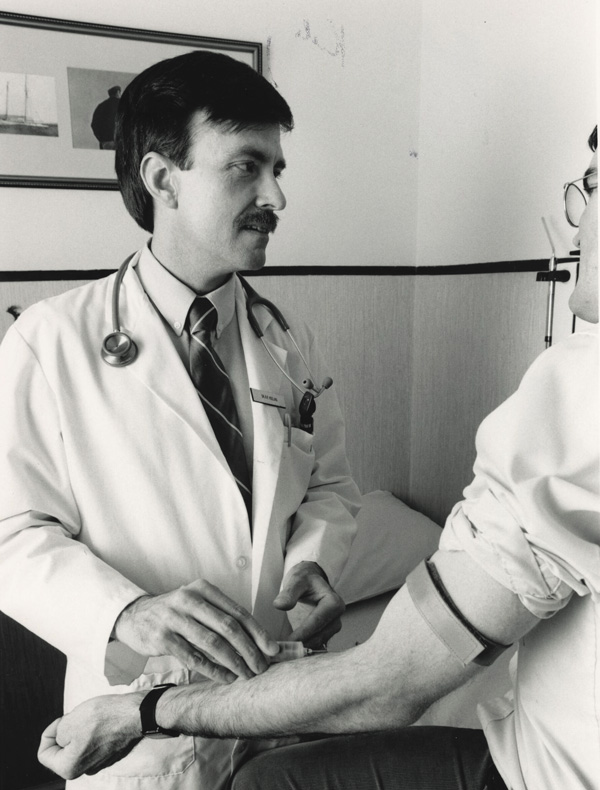
By then, the Gay Student Union (renamed the Lesbian Gay Student Union in 1984) was becoming more vocal. The group was still holding dances and meetings, and collaborating with more groups across Grounds. “The LGSU is more visible than it has been in a long time,” the president wrote in a 1985 newsletter. “In perspective, we’re doing OK. This doesn’t mean that there isn’t more to be done.”
In March 1988, the group held a public display of affection on the Lawn that drew more than 1,500 spectators. As members wrapped their arms around each other and sang “The Good Old Song,” some spectators booed and chanted “Transfer,” the Cavalier Daily reported. Two people wore masks and rubber gloves, and fliers were distributed supporting gay genocide.
In the 1990s, students found both homophobia and activism on Grounds. In 1990, racist and homophobic graffiti appeared across Grounds. And some at football games were still chanting “not gay” with “The Good Old Song.” At the same time, the LGBTQ+ community’s visibility was continuing to grow.
In 1991, then-President John T. Casteen III (Col class of ’65, Grad class of ’66, class of ’70) banned discrimination of staff and students based on their sexual orientation.
In 1996, Maria Pulzetti (Col class of ’99) and other members of the Lesbian Gay Bisexual Union held the first Day of Silence, when LGBTQ+ people wouldn’t speak so that the greater community would realize what they were missing. As many as 150 people joined in, including many straight supporters. Today the event is part of a national organization and reaches hundreds of thousands of students annually.
By the early 2000s, years of organizing made it possible for students to jump right into gay student life and activism. From the work of students including Kyle Ranson-Walsh (Col class of ’02) and Eddie Nelms (Arch class of ’00), the LGBT Resource Center opened in 2000. It now takes a central space in Newcomb Hall.
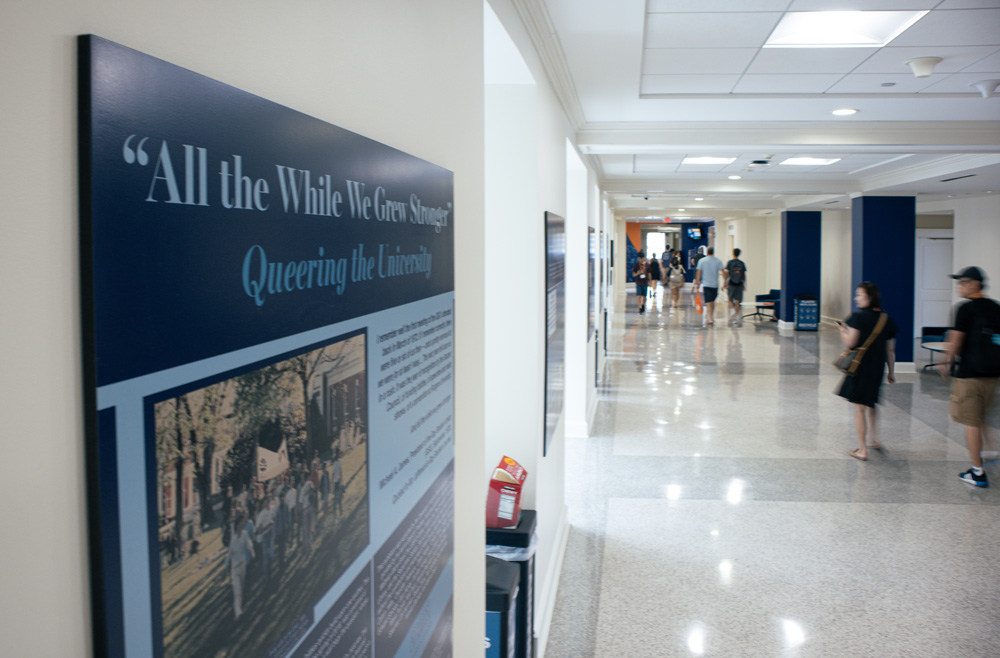
In 2019, independent group The Campus Pride Index ranked UVA No. 7 among the most welcoming colleges or universities to LGBTQ+ students across the country, in part because of its active resource center.
Today, the Gay Student Union has a new name: the Queer Student Union. It continues to provide mentorship and support. Drag bingo remains a popular event. New groups have popped up too, such as Sigma Omicron Rho, which is now part of the Multicultural Greek Council.
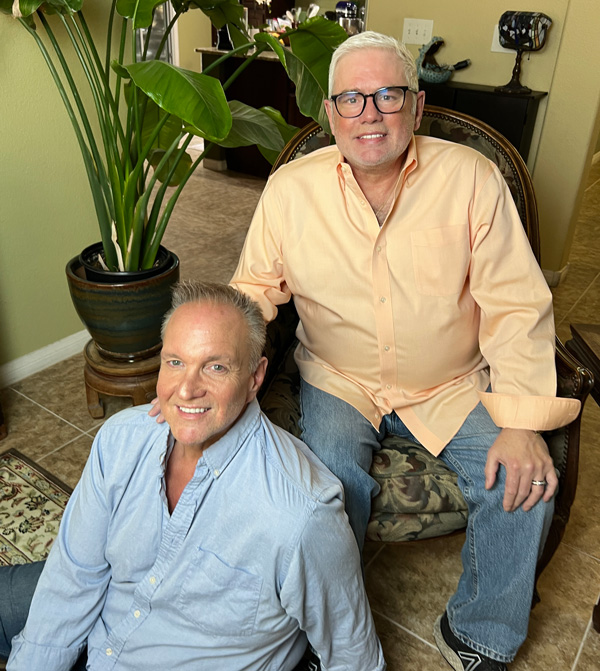
And then there’s QVA, formerly the Serpentine Society, UVA’s LGBTQ+ alumni network. Conceived in 1998, it’s an active force, providing nearly $300,000 annually in scholarships and support for students, as well as networking and events for alumni.
In fact, QVA’s work helped persuade Elkins to return to UVA—something he had had no plans to do. In 2002, he stepped back on Grounds for the first time since he graduated and has been involved with QVA ever since.
“I’m very happy with where the University is today,” he says. “It has grown tremendously just in terms of being a welcoming place for LGBTQ folks.”