How long before long COVID is extinguished?
What, exactly, is happening to a patient’s lungs during long COVID?
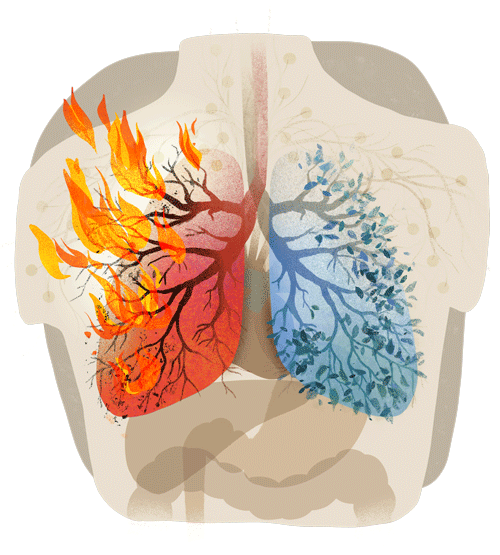
One theory is that the symptoms, such as a persistent cough and shortness of breath, are signs of an immune system that’s gone haywire. The body can’t stop fighting.
UVA researchers are working to unlock what’s triggering long COVID in patients’ lungs and, more importantly, how to treat it.
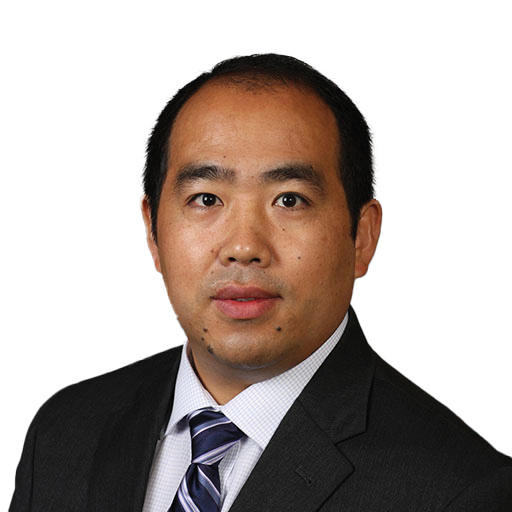
“My lab realized, ‘Oh, this is a significant problem, and we need to understand it,’” said Jie Sun, principal investigator at UVA’s Carter Center for Immunology Research. “In order to develop a treatment, we really need to understand what are the driving causes of developing these chronic conditions, and to not only understand the biology, but also develop preventive and therapeutic treatment options.”
According to the Centers for Disease Control and Prevention, an estimated 17 million adults in the United States reported having long COVID. That’s defined as a continuation of COVID symptoms two to three months after the initial infection with no other explanation. Women, and patients ages 40 to 59, reported the highest rates. Symptoms can run the gamut and include heart palpitations, nausea, fatigue—and to the interest of UVA doctors—a cough.
Early in the pandemic, Sun recognized the key to studying COVID wasn’t in people’s blood; it was in their lungs. His team used bronchoscopes to see inside lungs and also examined the damaged lungs of transplant recipients to study their function and look for scarring. They also worked with mice.
In instances of long COVID, they found an overactive immune system that never gets a chance to cool down. It’s almost always activated, like a trick birthday candle that reignites. As a result, the infection causes an inflammatory response that can lead to coughing, difficulty breathing or worse.
The challenge for doctors and researchers becomes how to turn off that switch, that activation of the immune system.
One solution, they believe, may be the kind of medicine used to treat rheumatoid arthritis and lessen inflammation. Think of that medication as inhibitors that send a message to stop fighting.
A clinical trial could help determine—in larger numbers than used in the lab’s studies—if this is a viable option.
Another UVA researcher is also working to help solve the lung complications that can accompany long COVID.
Jen Hendrick, a medical doctor of infectious disease, is designing a clinical trial that studies the early treatment of COVID with the allergy drug dupilumab, commonly used for asthma and sinusitis, which she hopes could prevent lung complications associated with long COVID.
She describes that illness as a “downstream pulmonary injury.” By analyzing multiple data sets of COVID patients, including some from UVA, Hendrick found that those patients with higher markers of an immune, allergic response in their blood were more likely to need a ventilator.
By blocking two of the proteins that create the allergic response, Hendrick hopes to help take away some of the difficulties of living with long COVID. In studies where mice were infected with the virus, those that received a blocker lived longer than those that did not.
“The idea would be to improve pulmonary function abnormalities not just in terms of magnitude, but in terms of timing,” she said.
That could mean a faster recovery, fewer hospital visits and fewer deaths.
Hendrick is seeking funding from the National Institutes of Health for a clinical trial. If approved, such a test could start in 2026.