Back to the future: Readers remember the high-tech from their college days
We asked: What was the hottest cutting-edge technology when you were on Grounds? And did you ever answer. Please enjoy this expanded edition of Time Capsule.
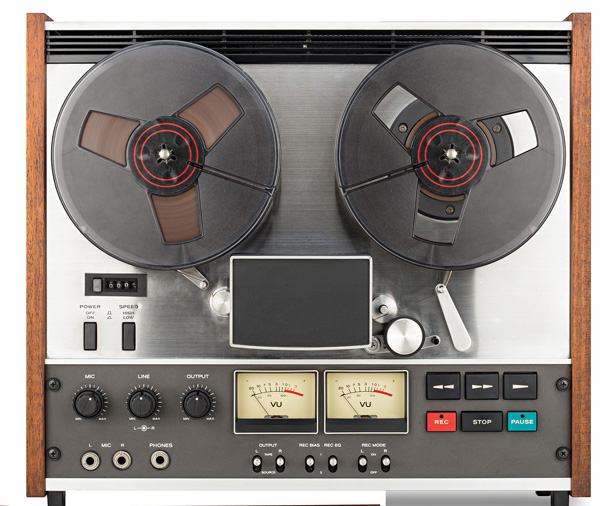
Many alumni from the ’60s and ’70s noted ever-evolving music technology in their responses. John Catron (Col class of ’66) wrote about transistor radios, while James Wright (Col class of ’69, Med class of ’76) cited the new component stereo systems of his era; Dan Wise (Col class of ’74) wrote about Bose speakers. Robert Hayden (Col class of ’74) says: “The music department had a Moog synthesizer in the ’70s. Cutting edge at the time but really a historical relic now.” And Paula Young (Col class of ’76) noted that WTJU began broadcasting in stereo.
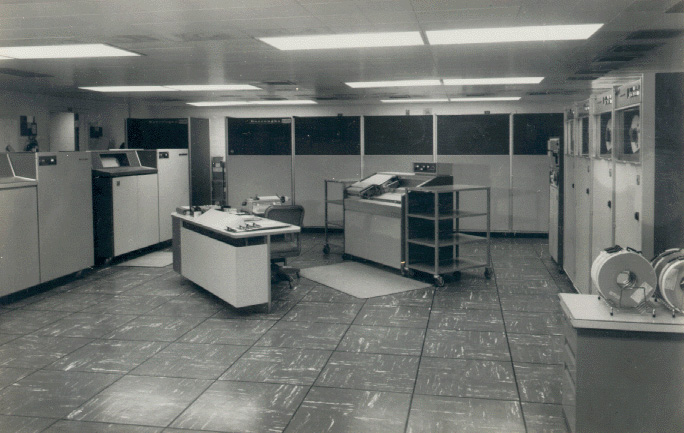
“Installation of the Burroughs B5000 computer that used punch cards in lieu of paper tape. The computer used ALGOL 60 language. We e-school students thought we had really arrived.”—Sam Query (Engr class of ’67)
“All Metcalf was astonished at the tiny cassette tape recorder Steve Middlebrook (Col class of ’67) had. (It was tiny compared with a standard reel-to-reel tape recorder—they were huge.) He faked out 25 guys, crowded into his dorm room. It would start and stop, seemingly at random. We theorized that it must be voice activated or gravity sensitive, etc. But sometimes it would play with no stimulus. Mystifying! Eventually someone noticed something in his hand. He was turning the microphone on and off, which started and stopped the recorder. If we weren’t laughing so hard we might have beaten him up.”—Michael Ridenhour (Col class of ’67, Educ class of ’73)
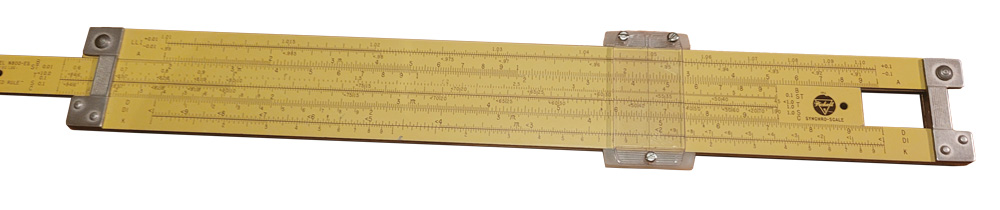
When Mike Daniel (Com class of ’58) entered UVA, he says, “The cutting-edge technology was a slide rule. Times have changed a bit.” Indeed they have, but slide rules ruled until the mid-’70s. Ronald Cox (Engr class of ’75, class of ’79) spent his first few years at UVA using one and still has it.
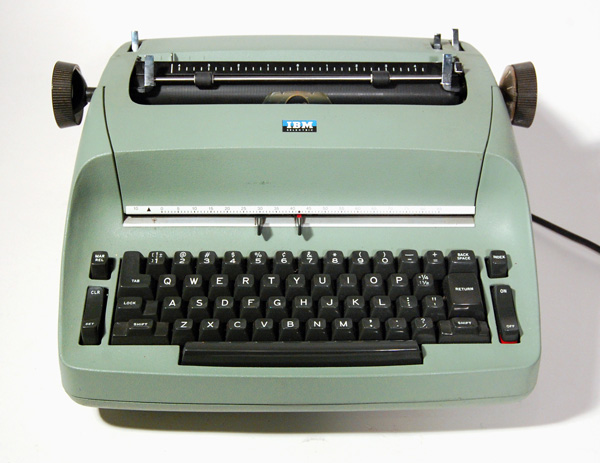
Several alumni from the ’60s noted the advent of the electric typewriter, particularly the IBM Selectric and its successors, their one golf ball–like mechanism replacing the manual typewriter’s individual flying strikers.
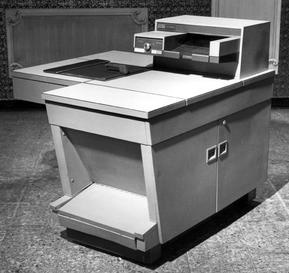
For some alumni from the mid-’60s to early ’70s, photocopiers were the height of new technology. T. Peter Park (Grad class of ’65, class of ’70) saw one in the law school library in 1963 and then in Alderman Library in 1964. Randolph Turner (Col class of ’70) used a photocopier for the first time during his first year. “If my memory is correct, it cost 25 cents per page, which was quite a bit of money back then. For me it was ‘cutting-edge technology’ that absolutely amazed me and saved a remarkable amount of time over having to otherwise take detailed written notes.”
Computers. You had to write your own programs and needed a big box of punch cards to take to the computer center and leave them overnight to run. One wrong punch in a single card and your program would not run. You were advised to number the cards in case you dropped them; otherwise, there was no way to get them back in order. We never dreamed then what computers would be capable of 60 years later.”—Reg Shiflett (Engr class of ’65, class of ’70)
By far the transformative technology cited most often was the handheld or pocket calculator.
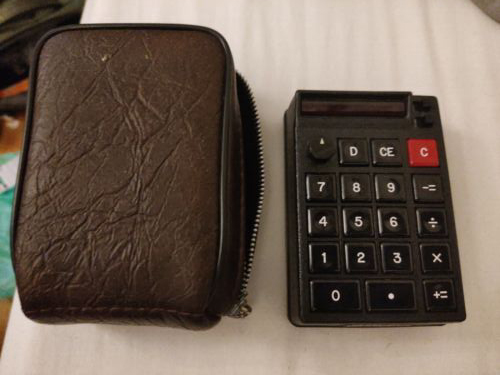
Dozens of alumni wrote in about them, starting in 1967 with a large spike in the mid-’70s. Exactly how pocketable they were is arguable; Bob Hicks (Col class of ’77, Law class of ’81) noted that his Texas Instruments model was “the size of a small shoe.” Steve Jacobs (Engr class of ’75) wrote that he used a Summit-brand calculator that was about an inch thick: “a quarter-pound ‘pocket’ calculator that could add, subtract, multiply, divide and provide percentages.” Robert Ellis (Engr class of ’73) recalled his “large Dictaphone calculator the size of a good book that only did simple math.”
While Hewlett-Packard and Texas Instruments were the biggest players in the budding technology, Richard Fredenburg (Engr class of ’71) wrote about a WANG desktop calculator in the reactor building, “the first all-electronic calculator I ever saw. Before that they were mechanical monstrosities that had trouble doing division problems.”
Of course, the relatively tiny technological marvels came at some expense: The battery-operated model required for Leigh Gehrig’s (Arch class of ’74) Structures class cost $50, and the Texas Instruments SR-10 cost Randy DeHoff (Col class of ’75) $149. Chuck Nesbit (Col class of ’77) bought a simple TI model that could add, subtract, multiply, divide and calculate square roots for $60, “the equivalent of about $430 today. At the 1973 minimum wage of $1.60 per hour, I had to work 37.5 hours flipping hamburgers to buy it.”
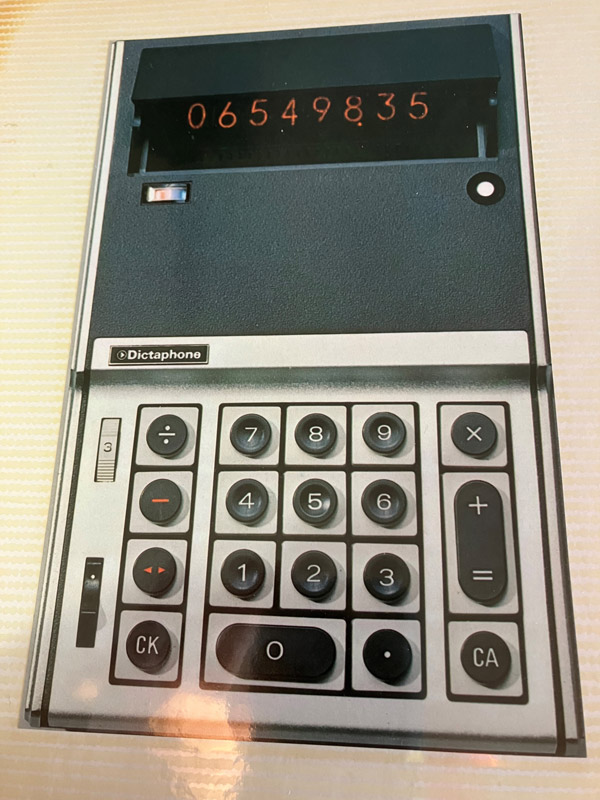
The technology behind calculators continued to advance. Frank Philpott (Engr class of ’75, class of ’77) started with one his first year: “I just had to get a four-function handheld calculator (add, subtract, multiply, and divide) at Christmas break for $125 and retire my slide rule for more extensive scientific calculations. Around my third year, it was time to retire both my four-function calculator and slide rule and buy a $150 Texas Instruments TI-50 scientific calculator. I wanted a sexier HP-35 scientific calculator, but at $399, it was out of my budget.”
From standing in line to going online, the ever-changing methods for registering for classes were signs of the technological times. In the ’60s, Roger Wiley (Col class of ’67, Law class of ’70) was among the many generations who grabbed physical cards: “You had to stand in lines at Memorial Gym to collect a separate computer punch card for each class you needed or wanted to take. Naturally, the cards for the most popular courses and professors (Raymond Bice!) were grabbed quickly. I’m sure the card system was a big improvement on whatever preceded it, but standing in line for those cards was painful.” In the ’70s, Beverly Riling (Educ class of ’76) and her classmates were enjoying computerized registration. By the ’90s the long lines were gone, having given way to automated registration by phone. Dave Longo (Engr class of ’98, class of ’01) says, “I can still remember the man’s distinctive voice when he announced, ‘Welcome to ISIS, the Integrated Student Information System.’” And by the time Katie Spicer (Arch class of ’05, class of ’10) was registering, students were signing up for classes fully online, “instead of calling in on the phone to enter codes!”
“I worked at a work-study job in the admissions office. They got a word processor to send out mailings to applicants and people interested in info. The machine took up an entire room!”—Karl Dehm (Col class of ’81)
“ATMs. They were really taking hold in the late ’70s. The Virginia National Bank had an ATM in the early 1980s, and being able to get cash was a big deal. On the honor system, we could write a check with a student ID anywhere. My dad would get my canceled checks and go nuts when he saw checks for a dollar or two for ice cream, saying that it cost more to process the check! He hated all those checks. ATMs were a relief!”—Jo Ellen (Friedman) Slurzberg (Col class of ’83)
“Air popper popcorn makers! I don’t know if they were cutting-edge, but they were a recent invention that every single dorm hall/suite had. We would sit out in the hallway of Echols every night with the poppers going and catch up on the latest with one another.”—Anna Lynch (Educ class of ’84)
“VisiCalc Spreadsheet from Apple. THE first automated spreadsheet long before today’s Excel!”—Bill Tyson (Com class of ’84)
“I was proud to bring my Commodore VIC-20 with me to Dunnington Dorm my first year. I used it to calculate and print out everyone’s portion of the phone bill. I also enjoyed practicing my programming skills in Pascal and Turtle Graphics.” —Stuart Brooks (Educ class of ’87)
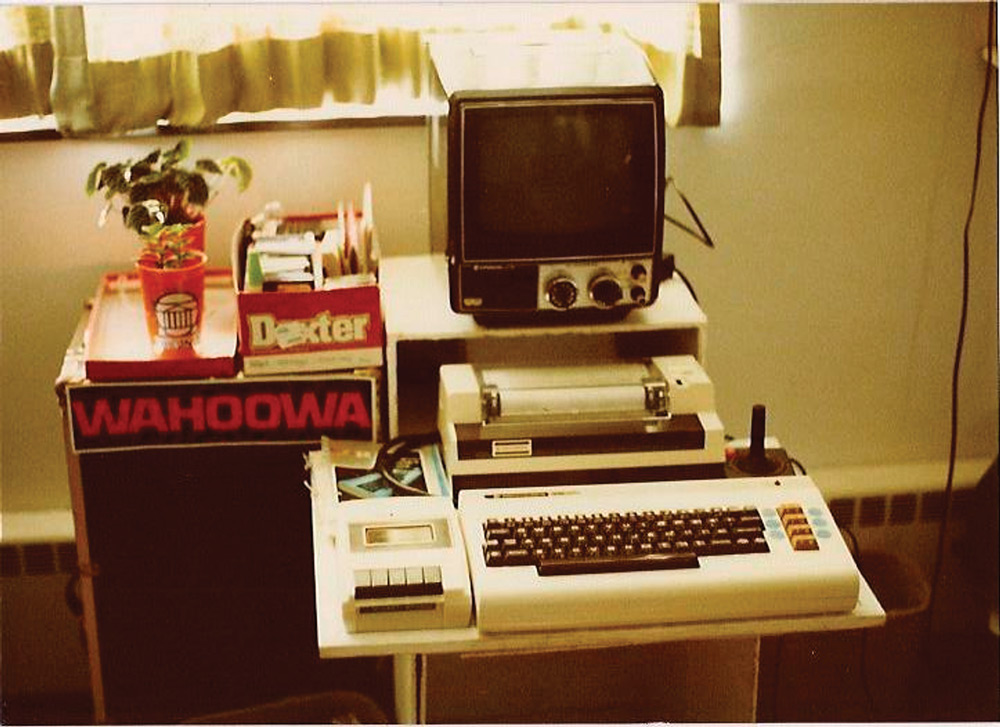
“When I arrived in 1984, the dorms were a cacophony of the click-clack of typewriters at night. That sound had mostly disappeared by my graduation in 1988. The University had set up some rooms with rudimentary computers for students to write papers using WordPerfect. F9 this, F8 that, etc.” —Bryce Diamant (Engr class of ’88)
“Eraser cartridge for the typewriter. Game-changer!”—Amy Marks (Col class of ’86)
“The answering machine! In a time without the internet or mobile phones, connecting with friends was haphazard. And FOMO (fear of missing out) was a thing then, too! I remember spending much of Thanksgiving weekend my fourth year reading Charlotte Bronte’s Villette for an English class. I got so punchy that I called my friends—who were all out of town—and read passages from the book onto their machines. I was raising a white flag, and they all called to check in on me when they returned.”—Paula Peters Chambers (Col class of ’89)
“Personal computer. Amber character-only screen, keyboard hinged up to close, handle in the back to carry—but it weighed 30 pounds so it was nicknamed the IBM Luggable. It had no hard drive, so everything, including the operating system, ran from 5.25-inch floppy disks.”—Matt Senecal (Com class of ’89)
“The Compaq Portable II computer. During finals fourth year, I had a 24-hour schedule for friends to come to my apartment and use it.”—Laura Brown (Col class of ’87)
“The Apple Macintosh. One fraternity brother owned one, and the rest of us fought over time to use it. When demand was too high, I fell back on an electronic typewriter that let you modify the last six words you typed before they printed. That was pretty slick, too!”—Patrick O’Malley (Col class of ’90)
“Hard drives! Didn’t have them in the school computers until my third or fourth year! Once lost a long paper just as I finished it because the floppy disk went bad.”—Dick Stanton (Com class of ’88)
In the mid- to late ’90s, students suddenly found themselves with something weirdly punctuated and completely foreign to most of them: an email address. Christina Grotheer (Grad class of ’95) got one when she enrolled in 1994: “I asked why I would need an email, and they said everyone was given one. I remember being uncertain about what it was even for—ha!”
“My first email address in my life was assigned to me as a first-year,” says Brooke Van Rensselaer (Educ class of ’02). “I remember questioning the purpose of email, as it seemed an inefficient way to communicate with someone when it was much faster to just call the person or tell them face to face.”
Email was even more inefficient at first, as you couldn’t reach many people outside Grounds; Jen Winters (Col class of ’92) could write to her dad in the Army. Ed Stone (Col class of ’94) says, “You could only send email within the university network among the state schools in Virginia. My mom worked at VCU at the time, so she was the first person I sent an email to outside of Grounds. She printed it, saved it for decades, and delivered it to me a few years ago. Thanks for keeping it, Mom! And, again, my apologies for never sending you letters during my first three years at Virginia.”
“In 1995, Netscape 1.0 was recently released, and each day the homepage listed what new websites were released the previous day! We experimented with HTML to make our own rudimentary websites. AltaVista, Ask Jeeves and Yahoo! were popular search tools (pre-Google).”—Dave Longo (Engr class of ’98)
“Access to the internet. This was the fall of 1994, and I was a new engineering graduate student. I was introduced to the web via the Mosaic browser. So crazy to think about it in comparison to where we are today.”—Adam Goodge (Engr class of ’97)
“I took a seminar on ‘The Information Superhighway’ my first year. We learned HTML 1.0 and had to get Unix accounts on darwin.clas.virginia.edu in order to create our own web pages. I learned basic AIX Unix commands and how to write basic HTML code. My entire career sprang from that seminar class.”—Evan Macbeth (Col class of ’97)
“Before the internet was a necessity, my buddy JEB hard-wired each room in the frat house via Ethernet for a class project and called it FratNet. Nobody really knew what to do with it; we plugged it into our PCs and poked around to see what this “World Wide Web” had to offer. Turns out it was just a fad.”—Mike Matthews (Col class of ’99)
“Telnet. I don’t know how new it was back in 1996-97, but it was new for us and we used it extensively for real-time chatting with each other in the computer labs. I remember chatting with my roommate for hours over Telnet and then going back to our room and chatting in real life for hours more. It was the beginning of instant messaging, and my UVA roommate and I continue to chat with each other in real time as technology has evolved, over 25 years later.”—Dina Tamimi (Com class of ’99)
“Cell phones saw a huge uptick in adoption while I was an undergrad. My first year, we were very dependent on the school’s phone system. My second year, my parents gave me a Motorola flip phone (circa 1995) that was really just for use in the car when driving home to Richmond or back to Charlottesville. By my third year, though, a lot of us had acquired the infamous Nokia 5160 phone, and interpersonal communications were forever changed by SMS texting. Also...the Snake game.”—Erin Schrad (Col class of ’01)
“Napster! (Oops.)”—Taylor Billingsley (Col class of ’03)
“Voicemail distribution lists so you could instantly let all your friends know where the party was at.”—Sam Bellas (Col class of ’01)
“An alarm went off in the middle of a Student Council meeting. Everyone stopped and looked. One student reached into her purse and pulled out a phone. I was astonished.”—Allan W. Eng (Col class of ’98)
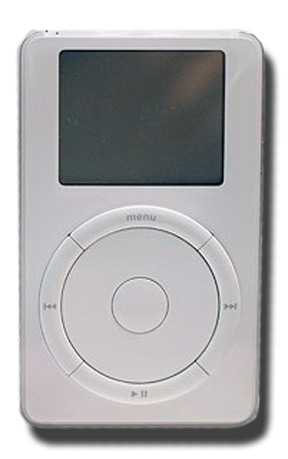
“The iPod debuted in 2001 in the fall of my fourth year. Imagine having thousands of songs in your pocket! The white wired earbuds practically became a fashion statement—and now iPods are no longer produced!”—Abby Newton (Col class of ’02)
“Facebook! In 2005, we may have been the only year that had Facebook registration at orientation. Once we got our shiny new University email address, our orientation leader took us to the computer lab at Hereford and explained how to join.”—Kaitlin German (Educ class of ’10)
“Uber if you didn’t own a car; cabs were basically nonexistent on Grounds. Uber changed the paradigm since you could suddenly get a ride anywhere.”—Aaron Way (Col class of ’14)