Archi-texts: A book tour of Grounds
Six books that show how Thomas Jefferson’s original vision has continued to inform the architecture of Grounds
The Law School at the University of Virginia by Philip Mills Herrington
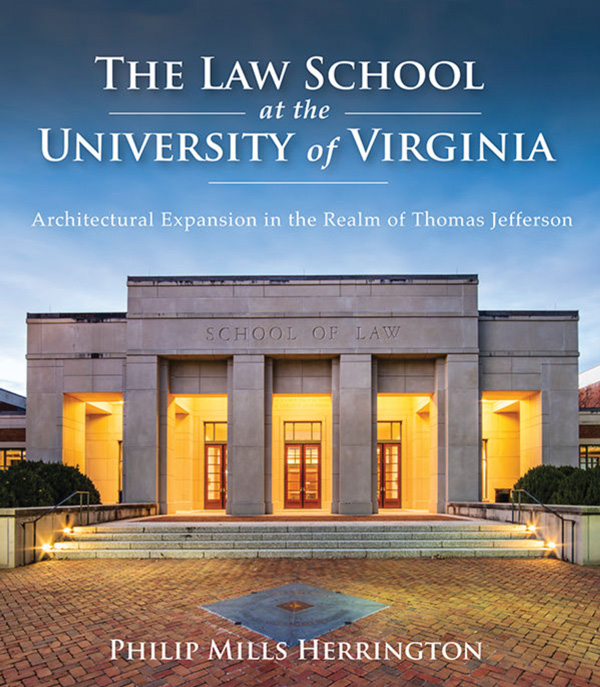
This four-part history of UVA’s law school chronicles 200 years of architectural expansion. Philip Mills Herrington (Grad class of ’07, class of ’12), a history professor at James Madison University, highlights the law school’s struggle to maintain the “Jeffersonian spirit” after moving to North Grounds in 1974—away from the classic architecture of the Rotunda and Academical Village. The solution? To create a specific “Law Grounds” by renovating the original law-business complex. The finished building’s red bricks and lofty pillars connected its design to existing University buildings. More than 10,000 alumni and friends contributed to the renovation, helping the law school’s architecture align with that of the University as a whole.
The Campus Guide: University of Virginia by Richard Guy Wilson and Sara A. Butler
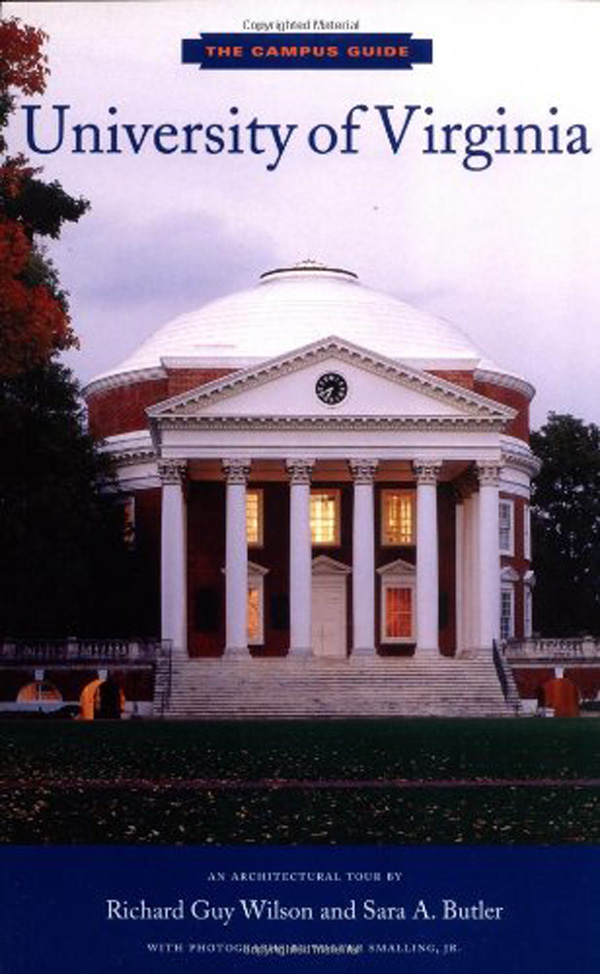
UVA Commonwealth Professor of Architectural History Richard Guy Wilson and coauthor Sara A. Butler (Arch class of ’96, Grad class of ’01), art and architecture professor at Roger Williams University, guide readers through seven walking tours that explore Grounds from its center to its edges. They offer an insider’s look at buildings and complexes such as the Monroe Hill dormitories, which were some of the first non-Jeffersonian buildings constructed at UVA. Wilson and Butler outline the history of each featured building, including Varsity Hall—home of UVA’s first infirmary. The first walk explores the University’s oldest buildings, and the walks become more modern as they progress, offering not just a tour of the physical Grounds, but a journey through time.
Urgent Matters: Designing the School of Architecture at Jefferson’s University by Karen Van Lengen
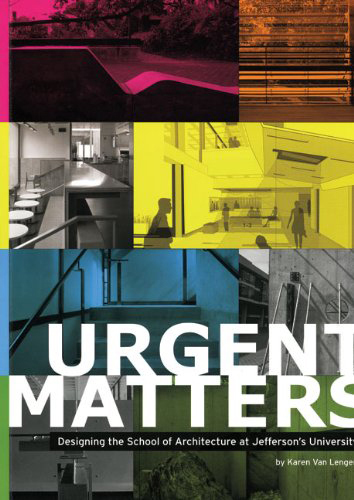
Former School of Architecture dean Karen Van Lengen tells the story of the Arts Grounds renovations of the early 2000s—and the struggle to balance contemporary design with Jefferson’s original vision. Through 12 completed projects, she recounts her efforts to stay true to Jefferson’s “deliberate overlapping of traditionally separate public and private realism, thereby forcing different groups—mostly students and faculty—to interact frequently and, at times, unexpectedly.”
On Campus by Robert A.M. Stern
In this survey of American college campuses, architect and architectural historian Robert A.M. Stern argues that the concept of Jefferson’s Academical Village, which was designed to separate the University from distractions of urban life amid the Industrial Revolution, still influences American campuses today. Stern, who designed the Darden School’s campus and the Curry School of Education’s Bavaro Hall, examines Grounds as the gold standard by which American college campuses are measured and explores other campuses that follow “in Jefferson’s footsteps.” That influence is perhaps most obvious at Columbia University, where architect Charles Follen McKim echoed UVA’s Rotunda in the design of Low Memorial Library.
Thomas Jefferson’s Academical Village: The Creation of an Architectural Masterpiece by Richard Guy Wilson
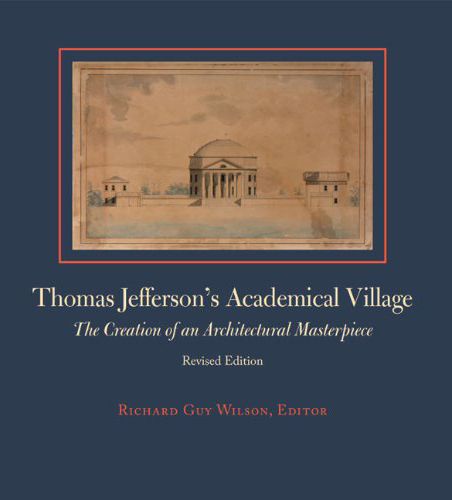
In between images of Jefferson’s hand-sketched plans, Wilson outlines a comprehensive history of how UVA’s Grounds came to be and the obstacles its founder faced along the way. Today, the Academical Village serves as an artifact of Jefferson’s mission to create a new public system of education. Wilson discusses the future of UVA’s architecture as imagined through intentional and informed restoration—which he says must be practiced by those who understand Jefferson’s original goal of fostering cross-disciplinary collaboration.
Educated in Tyranny: Slavery at Thomas Jefferson’s University by Maurie D. McInnis and Louis P. Nelson
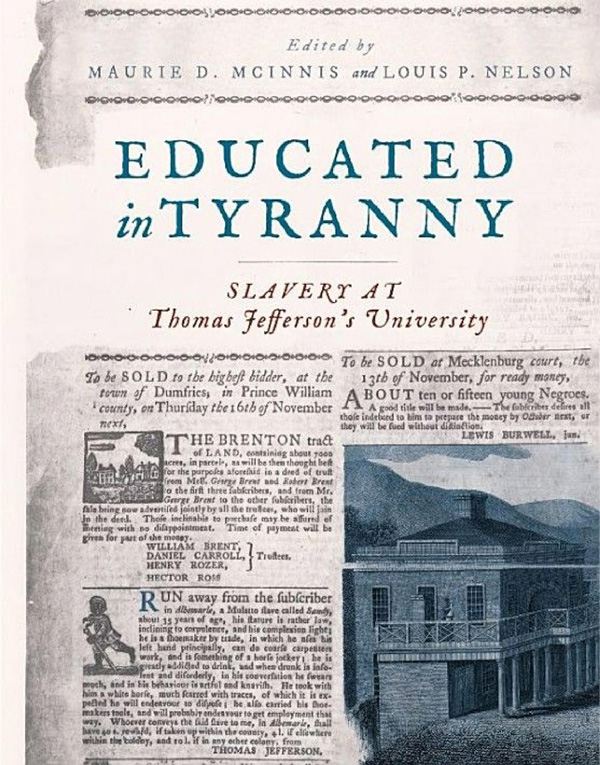
Cultural historian and Stony Brook University president Maurie D. McInnis (Col class of ’08) and UVA professor of architectural history Louis P. Nelson, along with a group of contributing authors, tell the story of the enslaved laborers who played a critical role in constructing UVA’s iconic architecture by forming terraces, digging cellars, laying bricks and shingling roofs. After they finished UVA’s preliminary construction, laborers took skills and techniques with them to create a new architectural language that spread across the commonwealth with the construction of courthouses, plantation manor homes, and churches. Back at the University, even after years of renovation and restoration, each building in the Academical Village stores the memory and history of the enslaved people who formed the buildings in which students and professors still live and learn today.