A big dill: UVA pickleball poised to become powerhouse
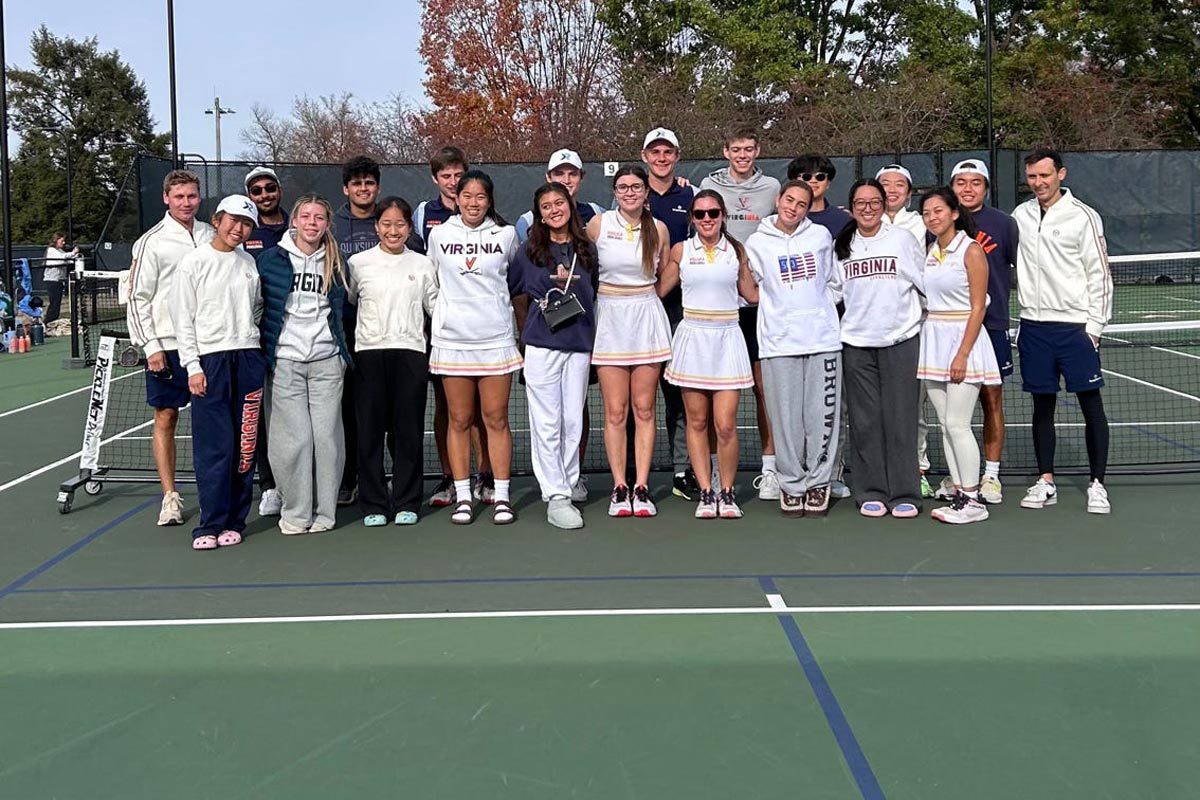
One day in November, Vivianne Ngo (Col class of ’27) played pickleball no fewer than three times: at practice with the UVA Pickleball Club, then in a match with a friend, and then at yet another practice with her teammates on the club’s top division tournament team. Ngo played four years of high school tennis, and she still plays that sport recreationally once a month or so. Playing pickleball three times in a single day is unusual for her, but the sport is her passion, the pre-commerce student from McLean, Virginia, says.
She’s got plenty of company. With 600 members, the UVA Pickleball Club is the largest club on Grounds, according to self-reported student council census data, and the largest college pickleball club in the nation, according to The Dink, a website that covers the sport. More than a recreational and social outlet, the club is growing into a competitive powerhouse—UVA won a national title in 2023 and finished second in 2024. It’s also a burgeoning business, with sponsorship deals in the mid-five figures and an annual budget of about $70,000, according to president Ryan Flanagan (Com class of ’25) and former president Conor Burns (Com class of ’25), now the club’s head of sponsorships and partnerships.
“This definitely turned into a largescale operation,” Burns says.
The club’s growth parallels the explosion in popularity of pickleball nationwide. Participation in the sport, a mashup of tennis, badminton and table tennis, grew to 13.6 million players in 2023, a 51.8 percent rise from the previous year and a 223.5 percent increase from 2020, making it the fastest-growing sport in the country, according to a 2024 report by the Sports and Fitness Industry Association. Pickleball’s growth has been fueled in large part by people 55 and older. But the craze has spread to colleges. More than 150 now have club teams, according to USA Pickleball. They compete on three different circuits.
“This is kind of a phenomenon, how fast this thing is growing,” Burns says. “The pro level, college level, amateurs, sponsors, the amount of money being poured into this.”
UVA’s club launched in 2020 with five members. They played on tennis courts adapted with taped-off boundaries, and even in a parking garage. More courts became available after the men’s and women’s varsity tennis teams moved to the Boar’s Head Resort sports complex in 2021, freeing the 13 courts next to Memorial Gym for student use, says Erica Perkins, UVA’s executive director of recreation.
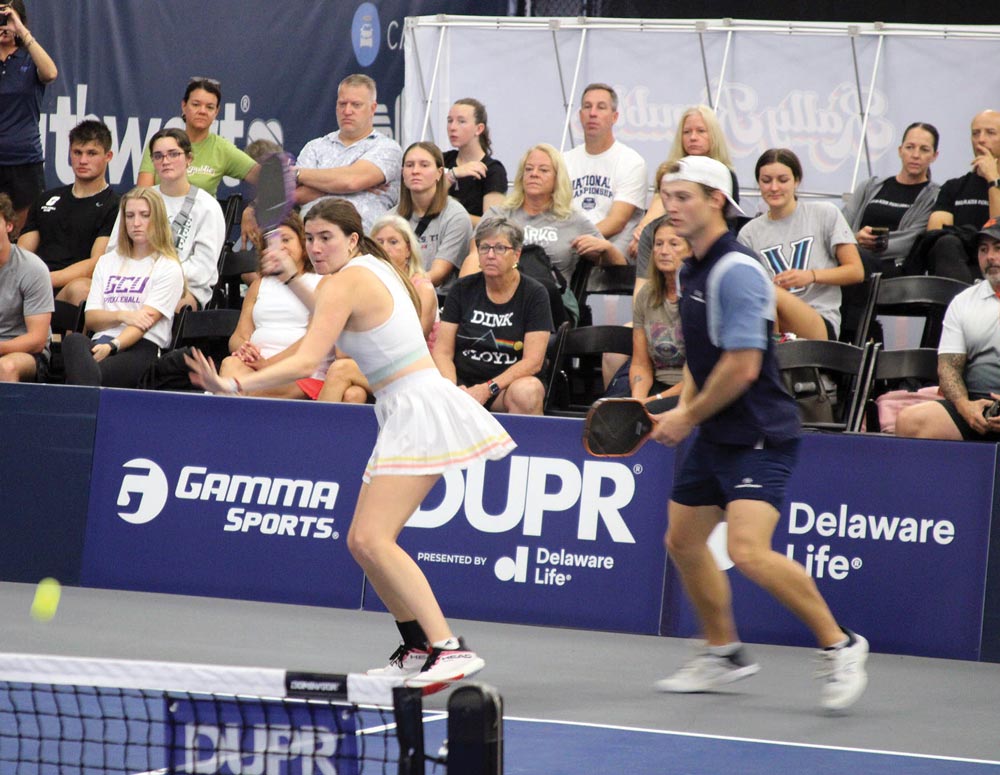
The university added pickleball lines to just a few courts at first, to gauge interest.
“We quickly realized we’d better (line) them all,” Perkins says. The four courts at the Dell were also lined.
The club’s membership swelled to the point that it had to draw a line of its own this past semester, capping the number of participants at its fall tryout at 500. An additional 100 students couldn’t be accommodated, Flanagan says.
Tryouts are for the club’s 24-member tournament team, which competes nationally on three non-NCAA circuits, and the 200-member social team, which is not as competitive. The remaining 400 or so members are in the general club, which is free to join and offers “a great way to dip your toe into the pickleball world,” according to the club’s website.
At the top level, the stakes are not insignificant. UVA’s 2023 national title earned the club $15,000 in prize money.
“We started to realize we were the No. 1 choice in the college space, and we wanted to capitalize.”
The national tournaments are sponsored by companies looking to tap into the growing college market. This gave Burns, a McIntire student, an idea: Why not leverage the power of the UVA brand, and the size and visibility of the club, and see what business opportunities might be available?
On the heels of its national title, the club signed shoe and paddle deals on its own. As other companies began reaching out, the club enlisted the help of a talent agency to negotiate more deals.
“We started to realize we were the No. 1 choice in the college space, and we wanted to capitalize,” Burns says. “But we don’t really have the expertise to understand how to structure those agreements.”
The club has since landed sponsorship deals providing balls, socks, nets, sports drinks, apparel, recovery products and even a ball machine, Burns says. Sponsors also help pay for travel to national tournaments.
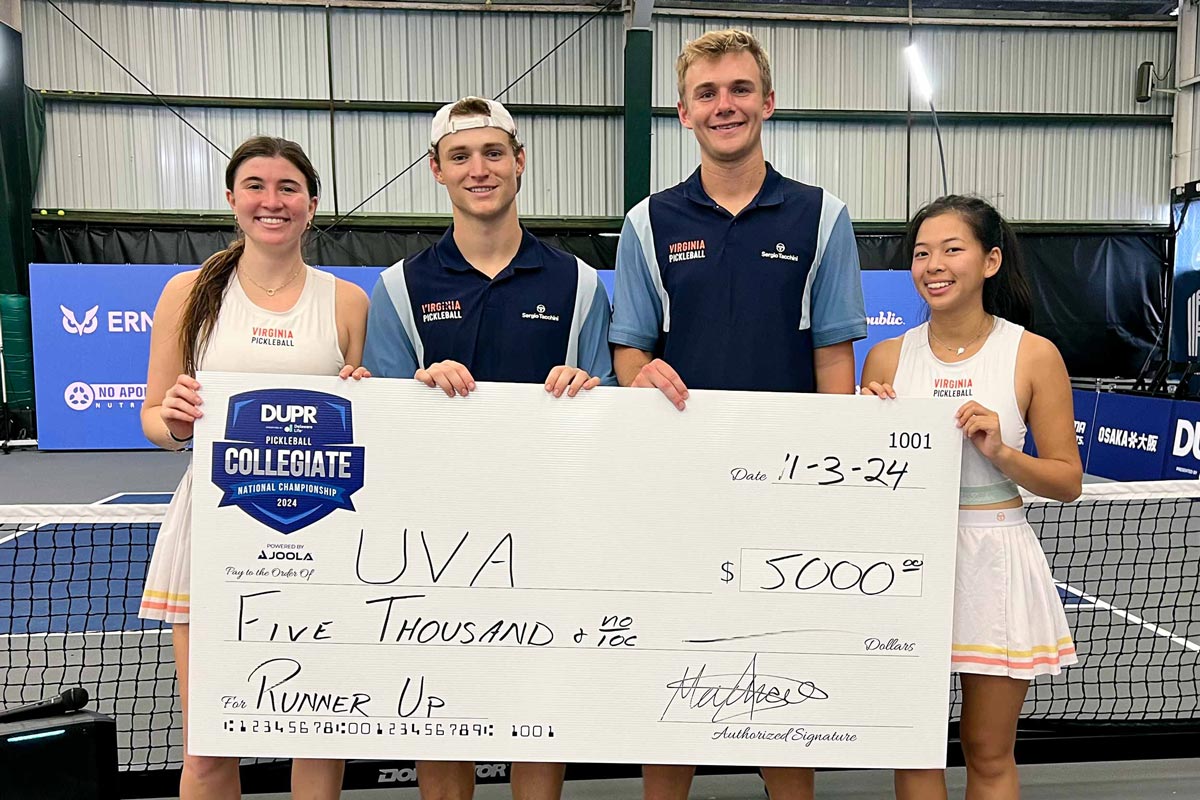
Even with all those resources, UVA could find itself playing catch-up. Utah Tech, which defeated UVA for the 2024 Dynamic Universal Pickleball Rating national championship, is now offering pickleball scholarships, according to The Salt Lake Tribune. Other schools, looking to make a name, are also pouring money into the sport, Burns says.
To keep up, the UVA club has begun expanding its fundraising efforts. To remain as accessible as possible, the club reimburses members for their travel costs.
“We travel a lot and that adds up,” Flanagan says.
Burns says the club is at a pivotal point, with a lot of uncertainty ahead. Among the questions: Will pickleball one day become an NCAA sport? Will sponsors continue to open their checkbooks? Will the three competing tours merge? (In addition to the Dynamic Universal Pickleball Rating organization, the Association of Pickleball Players and the National Collegiate Pickleball Association also sponsor championships.)
Burns and two other members of the top division tournament team, Eli Mautner (Batten class of ’25) and Alexandra McDonald (Col class of ’25), will graduate in May, but there’s plenty of talent in the pipeline, they say. Ngo, who is the fourth member of the top division team, will take over for Burns as head of sponsorships, looking to keep the club moving ahead on the court and as a business in an increasingly competitive environment.